
The defining essay
What Is LeapYear?
A first-principles look at the nine-month coming-of-age year we built, why it exists, and what students actually do.
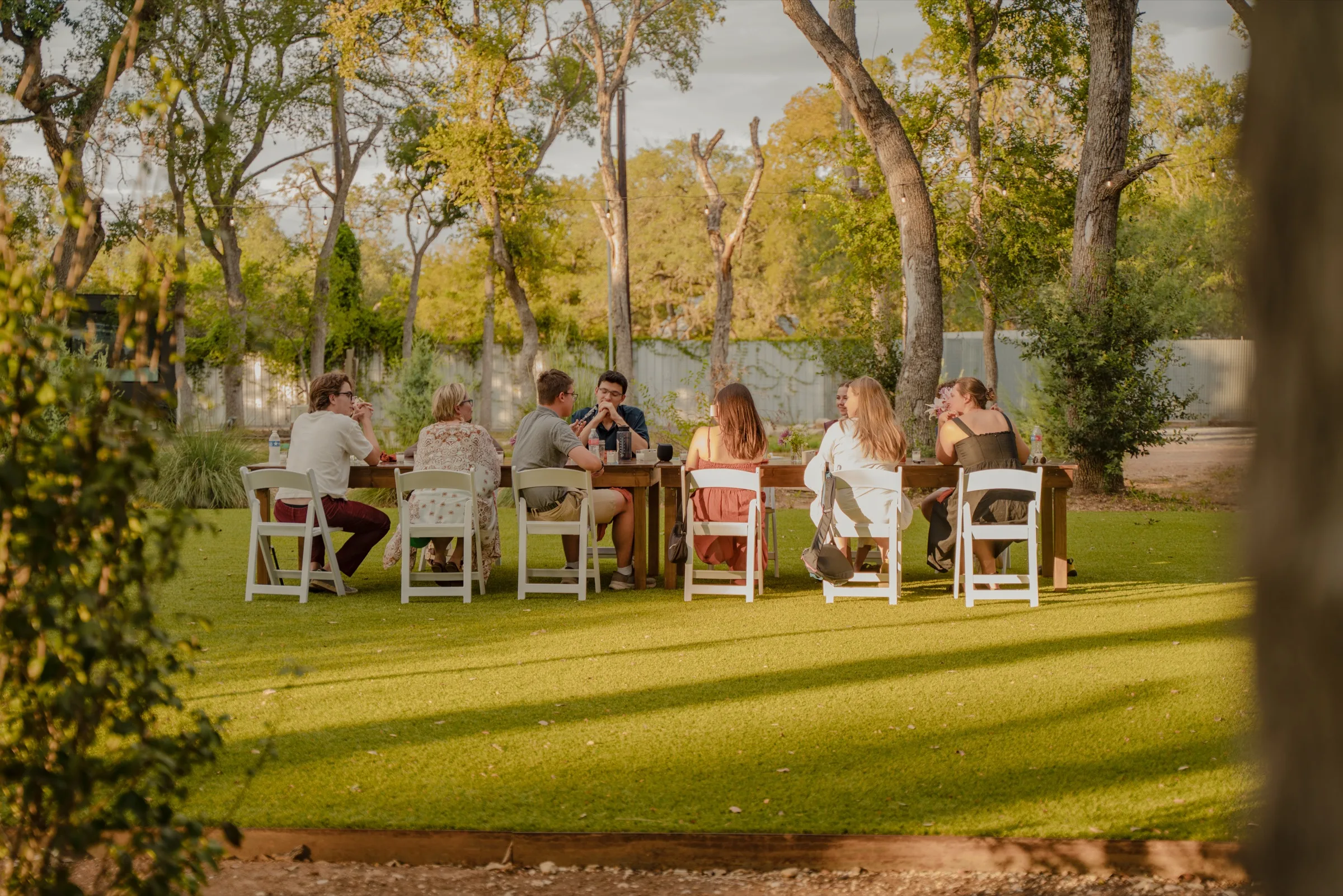
The simplest way to describe LeapYear is that it is a nine-month structured gap year or leadership incubator for students after high school. That description helps people understand where it fits. It does not fully explain what we have built.
When most people hear “gap year,” they picture travel, service, or a year away from school before returning to the normal path. Those can all be good things. LeapYear begins with a different question: if we went back to first principles and designed the best possible coming-of-age year for this moment, what would young people most need to learn, practice, and experience before launching into adult life?
The world students are coming of age into
When it comes to this generation, we are optimists. We believe young people have the potential to be extraordinary. They do not need to be coddled or diagnosed. They want to be challenged. They want to do things that matter. But they are coming of age inside a set of systems and cultural forces they did not create, and those forces are shaping them.
Three compounding challenges define this cultural moment.
The lost purpose of education
Higher education once claimed a broad purpose: the pursuit of truth, the formation of citizens, and the cultivation of people capable of leading across society. Over time, the general public promise narrowed. Go to college, earn a credential, get a job, and secure a stable life.
That bargain is becoming less reliable just as it becomes more expensive. But the deeper problem is not simply cost or job placement. Education increasingly asks students to choose a credential and career before helping them understand what education, work, or a human life is for. We have separated preparation for work from formation for life.
The status quo focuses on asking students, “What are you going to do?” They are given very little help answering well. This results in compounding pressure that young people translate as feeling “behind.” The unspoken assumption is that you need to have your future decided by eighteen.
A crisis of exemplars
Young people are inheriting institutions they do not trust and leaders they often do not want to follow. Across business, politics, churches, and public life, a generation has watched the effects of rewarding achievement over character. Our society rewards those who “get stuff done” with outsized influence. Yet few of the leaders with influence are people that young people want to be like.
The result is a generation with enormous capacity and few shared pictures of what good leadership looks like. Instead of seeing existing institutions of society as their inheritance—places that need reform and reinvigoration—young people often reject them altogether, looking for new answers or even ways to “opt out.”
We need rooted, healthy leaders: people who can lead themselves, lead others, carry responsibility, and act for the flourishing of the people and places entrusted to them.
The hollowing of attention and formation
This generation has been shaped by the attention economy—an experiment run on children without their consent. Many young people are anxious, distracted, and accustomed to having every empty moment filled. Their ability to read deeply, remain present, tolerate boredom, and follow a question for a long time has been weakened by the environment around them.
At the same time, they are stepping into the age of artificial intelligence. We do not know its full implications, but it is already changing learning, work, and the distribution of power. We are placing some of the most powerful technology humans have ever created into the hands of a generation formed by TikTok.
The answer is not fear of technology. It is the formation of people wise enough to use it. Information is abundant. Judgment, attention, courage, character, and the ability to remain deeply human are increasingly scarce.
These may look like three different problems—one educational, one civic, and one technological. Beneath all three is a problem of formation. Each raises more basic questions: What is a human being? What is a life for? What kind of person can be trusted with responsibility, influence, and powerful tools?
The culture offers many answers. It treats a young person as a future worker, a consumer, a political demographic, or a personal brand under construction. The Christian story begins somewhere else. It says human beings are image bearers: made by God, loved by God, and invited to participate in what God is doing in the world. We are embodied, relational creatures created to love, create, cultivate, and steward.
That theological and ontological conviction—the truth about God, reality, and what a human being is—shapes everything LeapYear does.
Most students nearing the end of high school are asked: Where are you going? What are you going to study? What job do you want? Those questions matter, but they begin too far downstream. At LeapYear, we start with three questions that come before them.
What story are you living in?
We begin with the Story of God because it gives students an identity they do not have to invent and a purpose they do not have to “find.” In this story, human beings are made in the image of a God who loves them. They are created to participate in his work—to create, cultivate, and steward what has been entrusted to them.
What is your story?
Students then examine their unique design: their gifts and aptitudes, their desires and experiences, and also their limits, responsibilities, and context. Self-understanding is not an end in itself. The question underneath it is: how are you invited to participate uniquely in the Story of God? We use vocation to describe this broader way of contributing to God’s restorative work in the world. It includes a career, but it is larger than a career.
What are you going to do about all that?
Students have to aim their intent. What will the telos—the end their life is pointed toward—actually be? What will they choose, and how will that choice shape the way they live today? Then we give them a practical method for moving forward: talk to people, try things, build, serve, reflect, and take the next step.
These three questions organize the year. Students encounter the Christian story and wrestle with what it means for their identity and purpose. They build a more honest understanding of their own story and how they have been designed. Then they learn to take meaningful action—to move from reflection into the world, test ideas, serve others, and accept responsibility for what comes next.
This is an important shift at eighteen. Parents and teachers have carried much of the responsibility for a student’s development. They will continue to matter, but they cannot take responsibility for a young person’s life, faith, or formation into adulthood. That responsibility increasingly belongs to the student.
LeapYear gives students a place to practice carrying it.
The idea grew out of a similar experience in our founder’s life. At eighteen, Riley did not know how to choose a direction. He spent two years trying things—mediation, real estate, business, and film—and shadowing people whose work he wanted to understand. Those years were called time “off.” They were on—just not at a university. They gave him the clarity, maturity, and confidence to use college differently when he arrived. LeapYear builds a structure around that kind of active exploration, with the coaching, community, formation, and method he wished had been available to him.
A trellis for the year
We think of LeapYear as a trellis. A trellis does not cause a plant to grow, and it does not determine the exact direction of every branch. It creates the structure that allows growth to take hold. It gives support, creates useful constraints, and keeps the plant from collapsing under its own weight.
LeapYear provides that kind of structure through a cohort, coaches, mentors, curriculum, spiritual practices, workshops, projects, deadlines, and regular feedback. The student still has to do the growing. In fact, taking responsibility for the year is part of the point.
The goal is not to create a short burst of motivation. Motivation fades. The year gives students enough time, practice, and accountability for new ways of learning and acting to become durable.
We believe curiosity is the fuel for learning. That belief shapes the program. Students do not spend most of their time sitting in classes and completing conventional homework. The curriculum gives students first principles, tools, and methods. It then asks them to use those tools to design experiences and pursue real questions.
This makes much of the year feel like a choose-your-own-adventure with a clear method and real accountability. One student may explore architecture by interviewing architects, studying a public space, learning basic design software, and producing a small proposal. Another may investigate counseling by talking with practitioners, studying different approaches to care, and volunteering in a setting where they can serve people directly. Another may build a small business experiment, work on a film set, study a local problem, or spend time inside a field they have never encountered.
The paths will look different because the students are different. The method underneath them is shared.
Students learn to know themselves, get curious, focus on a question, talk to people, try something, reflect on what happened, and repeat. They learn to treat uncertainty as something they can move through rather than something they must solve in their heads before acting.
The result we are working toward is more than career clarity. We want students to build a coherent philosophy of life, deep self-understanding, and a latticework of philosophically aligned mental models they can use to make decisions. We want them to become leaders with both character and agency: people who are rooted in conviction and able to act on it for the sake of others.
How much time does LeapYear require?
LeapYear is a full-time commitment. Students should treat it as their primary responsibility during the nine-month program.
“Full-time” does not mean every hour is scheduled by LeapYear or spent in a classroom. A large part of the program is intentionally self-directed. Students need time to conduct research, schedule conversations, travel to a job shadow, volunteer, build a project, test an idea, and follow a line of curiosity further than they expected.
A normal week generally includes:
- About 5–10 hours of reading, challenges, reflection, and other curriculum work.
- About 20–25 hours of Design Sprint work. Students may spend more when a project, question, or opportunity gains momentum.
- Coaching, cohort gatherings, spiritual formation, workshops, and playbacks in which students share their work and learn from one another.
- Occasional evening events, full-day intensives, retreats, and travel.
The exact shape of a week changes depending on the work underway. Some weeks include more reading and structured instruction. Other weeks require a student to spend most of the day out in the world conducting interviews, shadowing, serving, researching, or building.
Part-time work may be possible around LeapYear. Another full-time job or full school schedule is not. The work depends on students having enough control over their time to pursue an unexpected conversation, spend a full day with a practitioner, travel to an opportunity, or stay with a project when it becomes genuinely interesting.
What will a student actually do each week?
Most of a student’s week is spent doing: experimenting, talking to people, researching, shadowing, exploring, building, testing ideas, and reflecting on what happened.
The curriculum portion of the week supplies the shared foundation. Students read books and essays, work through practical challenges, and learn tools for spiritual formation, self-leadership, communication, decision-making, and Career Design. They might examine how their attention is being shaped, learn how to ask someone for a career conversation, study the story of Scripture, practice a spiritual discipline, identify their values, or prepare to give and receive substantive feedback.
Live gatherings give the cohort a place to work through those ideas together. Students participate in workshops and full-day intensives, meet with coaches, practice spiritual formation, and hear from people who have lived the things being discussed. We prioritize exemplars and practitioners: people who can show students how convictions, decisions, and work look in a real life.
Who students look up to matters because it shapes who they become. We choose exemplars for the character of their lives as much as for the work they have accomplished. Students do not only hear them speak. They visit workplaces, share meals, ask questions, and see how a person has put convictions into practice.
The cohort matters for the same reason. Students spend the year around peers who are also asking serious questions, taking risks, and learning to follow through. They are expected not only to receive from that community, but to invest in it.
Students also share their own work. We call these moments playbacks. A student might explain what they tried, what surprised them, what failed, what feedback they received, and what they will do differently next. The cohort asks questions and helps the student see things they may have missed. Peer accountability and real feedback matter more here than a grade.
The rest of the week belongs to the student’s Design Sprint. This is where the ideas taught by LeapYear become lived experience.
In a given week, a student might:
- Ask six people who know them well to describe when they have seen that student at their best.
- Choose a subject and learn about it through several modes: read, write, do, make, go, and talk.
- Generate a wide list of possible jobs or fields, narrow the list, and investigate what the work is actually like.
- Conduct a series of conversations with practitioners, including people outside the student’s existing network.
- Shadow someone at work or volunteer inside an organization.
- Design a small project, service, or artifact and get feedback from a real audience.
- Explore an ache in the world and build a solution-based experiment in response.
- Develop a capstone project that integrates the student’s convictions, interests, abilities, and growing competence.
Students are not expected to do this alone. Coaches help them process experiences and identify the next useful step. The cohort creates accountability and a place to share learning. LeapYear supplies deadlines, methods, and feedback. But students make calls, send emails, show up, solve problems, and complete the work themselves.
What are Design Sprints?
A Design Sprint is a focused period in which a student pursues a real question through action.
Students are used to being told what to learn, how to learn it, and how to prove they learned it. A Design Sprint asks them to take increasing ownership. They begin with a curiosity, uncertainty, or problem. They decide what they need to learn. Then they get close to the subject through people, places, research, and practical work. They create or attempt something, collect feedback, and reflect on what the experience taught them.
The basic process is the Career Design Flywheel:
Know Yourself → Get Curious → Focus → Talk to People → Try Things → Reflect
The reflection feeds the next cycle. Students return to the flywheel repeatedly, each time with better questions and greater independence.
“Try Things” can include both experiments and prototypes. An experiment is an activity designed to learn something. Shadowing an accountant for a day may tell you whether you enjoy the environment and type of work. A prototype involves making or delivering something so that another person can respond to it. Creating a sample campaign for a nonprofit, building a small piece of software, or planning an event gives you feedback on your work, not only your impressions of the field.
A Design Sprint does not have to confirm a student’s original idea to succeed. Ruling out a direction can be valuable. Discovering that the work differs from the imagined version is valuable. Sending outreach emails that receive no response can expose weaknesses in the approach and lead to a better one. The point is to replace vague assumptions with evidence.
This is useful for students who have no idea what they want to do and for students who already have a direction. A student who says, “I want to make films,” “I want to start a business,” or “I want to become an engineer” still has important questions to answer. What kind of work within that world fits them? What does the daily reality require? What skills, relationships, and experiences would make the direction more concrete? Design Sprints let a student test and deepen an existing direction as well as discover a new one.
What turns a dream into reality is action.
The form of the sprint changes throughout the year. Early Design Sprints are shorter, more prescribed Curiosity Sprints. LeapYear provides the question, sequence, and deliverables so students can learn the method. Later sprints give students more control over the subject, process, and use of time. The final capstone asks them to design and manage a substantial project and bring together what they have learned across the year.
Over time, students build a body of experiments, relationships, and proven work. More importantly, they learn a repeatable way to move forward when the answer is unclear.
How does the work change over the course of the year?
The year moves through three arcs: Foundations, Exploration, and Application. The structure gradually shifts from high guidance to student ownership. We do not expect a student to arrive knowing how to manage an open week, design a useful experiment, or learn independently. Those capacities are trained.
Foundations: Story and self-understanding
The beginning of LeapYear has the most structure. Students establish the rhythms and expectations of the program, build relationships with the cohort, and learn how to be responsible learners.
The central question is: What story are you living in?
Students encounter the gospel as the story of God’s creation, rescue, and restoration of the world. They wrestle with their place in it and begin practicing a small set of spiritual disciplines. They examine their attention, habits, values, aptitudes, strengths, personal history, and assumptions about work. They learn the Career Design Flywheel and run early Curiosity Sprints with close direction and frequent feedback.
This part of the year provides clear expectations, modeled experiences, and specific deliverables. Students are learning the method while using it.
Exploration: Design, responsibility, and experiments
As the year continues, the scaffolding loosens. Students have more choice over the questions they pursue and the experiences they design.
The central questions become: What is your story? What does the world need? How are you invited to participate uniquely in the Story of God?
Students explore vocation and calling, investigate a wide array of problems, and spend time getting up close to them. They build relationships with practitioners and begin running deeper Flywheel cycles in directions they choose. They conduct career conversations, try work in the real world, take on solution-based experiments, and practice leading alongside their peers. They learn to give and receive feedback, handle conflict, collaborate, and accept responsibility for others.
Spiritual formation continues through the entire year. Students begin articulating a working sense of calling and building a Rule of Life: a cultivated set of practices and rhythms that can support their faith, relationships, work, and health now and beyond LeapYear.
LeapYear still provides milestones and support, but students are expected to initiate more of the work and make more decisions about how they will carry it out.
Application: Telos, action, and the capstone
The final arc is the most self-directed.
The central question is: What are you going to do about all that?
This is where students bring intent and action together. Where are you headed? Who are you becoming? What will the telos of your life be? As you learn to lead yourself, other people will follow. Where do you want to take them? What is your vision, and what is the next right step toward it?
Each student names a North Star: a portrait of who they are becoming. The North Star is not a job title or a brittle ten-year plan. It gives the student a direction by which to navigate decisions, opportunities, and changing circumstances.
Students then design and complete a capstone project that brings together their convictions, self-understanding, interests, and abilities. They manage their own time and project within program-defined milestones. Coaching and cohort feedback continue, while program-led reading and instruction decrease.
This is also when the cohort completes the international service project it has been working toward throughout the year. The constraints are clear: students must travel internationally, serve a community or organization, plan and execute the trip together, and fund it without asking their parents for money.
This project is a leadership laboratory with real stakes. Plans will change. Problems will emerge. Students will have to raise resources, make decisions, divide responsibility, and follow through. They will bump into the realities of collaboration, communication, and conflict, then practice navigating those realities as a team. LeapYear provides support and safety; the students carry the work.
Students assemble a portfolio of their work, experiences, and reflections. They clarify a next step and explain the reasoning behind it. At the final Showcase, they tell the story of their year: where they began, where they are now, where they are headed, what they built, how they grew, what they now believe, and what they intend to carry forward.
The aim is not a rigid plan for the next ten years. Plans break. Students leave with a strategy for life: a grounded understanding of who they are and whose they are, a growing body of convictions and mental models, relationships with people who can continue to sharpen them, and a practiced method for moving through uncertainty.
A plan gives you a route. A strategy helps you keep moving when the route changes. The student’s portrait of who they are becoming is the North Star. The Career Design Flywheel is the method of navigation. Together they allow students to remain grounded in their direction while rerouting when the world does not cooperate with the plan.
Who LeapYear is for
LeapYear is for students who are curious, coachable, and willing to take the year seriously. They do not need to arrive with a polished plan or a particular level of confidence. They do need to be willing to ask honest questions, choose to participate fully, act on what they are learning, and invest in the people around them.
Some students enter with no idea what they want to do next. Others have a strong direction they want to test. Some intend to attend college afterward; others do not. The common thread is not uncertainty about college. It is a willingness to become a self-driven learner and take increasing responsibility for one’s own life.
LeapYear begins with more structure and gradually releases it. High school usually gives students a schedule. Adult life gives them an open world. The goal is not to keep students dependent on our structure, but to help them learn how to create a faithful, purposeful structure of their own.
What a student is building
By the end of LeapYear, students should have more than memories and ideas. They should have evidence.
They will have a body of experiments and completed work. They will have stories of trying, failing, adjusting, and finishing. They will have relationships with mentors, peers, and practitioners. They will have a personal Rule of Life, a clearer account of their calling, and a portfolio that shows what they have done. They will know how to enter a new field, ask better questions, seek feedback, learn independently, and take the next meaningful step.
We describe the outcomes as clarity, confidence, character, and competence. Conviction runs through all four: clarity about what is true and the courage to act on it.
We are not promising that every student will leave with one permanent answer about a major or career. That would misunderstand both the student and the world they are entering. We are helping students become wise decision-makers and self-driven learners—young adults who can encounter uncertainty without drifting or freezing.
The goal is not simply more agency. Agency without character can become exploitation: the ability to get things done without a worthy reason for doing them. Character without agency can remain passive: good intentions without the ability to move. LeapYear holds the two together. We are forming young leaders who can take meaningful action from deep conviction, toward the flourishing of others.
That is what we mean when we say LeapYear goes back to first principles. Before asking students to select a path, we help them see the world they are entering, understand the Story they are part of, know the person they are becoming, and accept the responsibility they now carry. Then we give them room to act.
We want to commission devoted disciples who are living for more, living fully alive, and part of something worth dying for.
Leaders equipped to navigate uncertainty with wisdom and courage.